
Building a home in Broome costs more and takes longer than the same house in Perth, and the reasons are specific rather than vague. Materials travel more than 2,200 kilometres up the Great Northern Highway. Cyclone season runs November to April and can shut that road with little notice. Cyclone wind region certification, termite management and wet season scheduling all apply here and none of them apply in a Perth suburb. A builder who has not built their systems around those three things will quote you a timeline they cannot hold.
This guide covers what a build actually costs in Broome, how long it genuinely takes, the contract clauses that cause most of the cost blowouts we see, what a real quote looks like, and how to check a builder before you sign anything. We have been building in the Kimberley since 2000, so everything here comes from work we have done in Bilingurr, Cable Beach, Djugun, Minyirr and Old Broome rather than from a textbook.
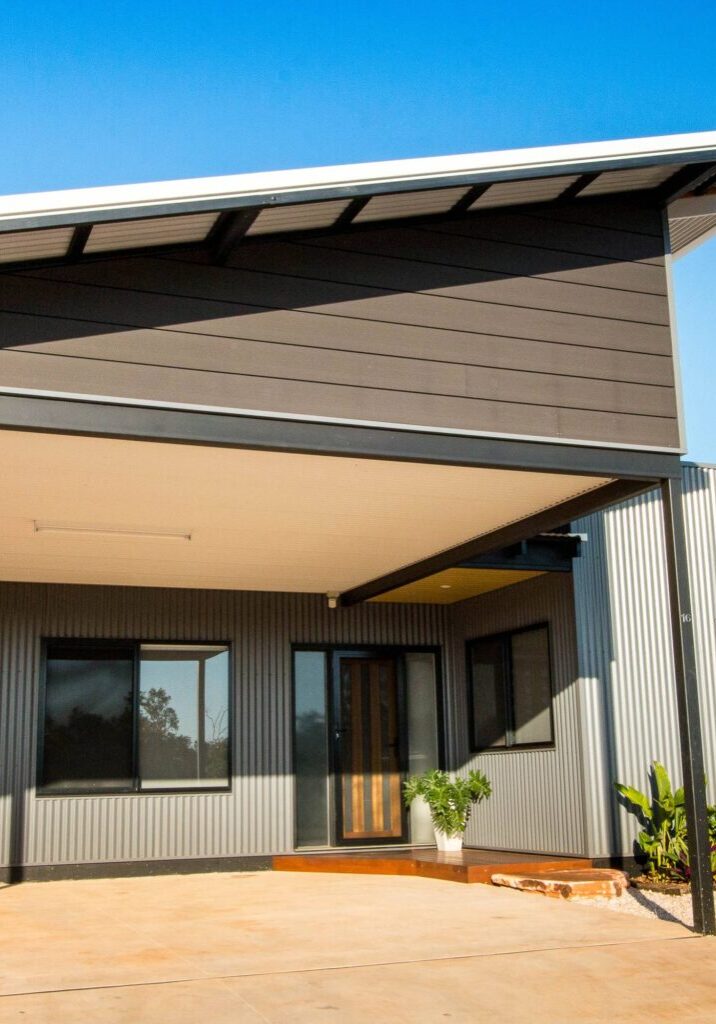

What a new home in Broome actually costs
Our current entry price for a 4x2 home in Broome is $600,000 inc GST. Land in Broome now sits upwards of $300,000, where five years ago the same block was $200,000 to $225,000. Land for a 600sqm block is around $340,000.
The number that matters more than the headline price is the gap between the quote and the final invoice. That gap is where most people lose money, and it is almost always caused by the contract rather than by the builder being dishonest.
Two things drive it. The first is a cost plus contract, where you pay the actual cost of the work plus the builder’s margin, and that margin can run up to 15 percent of the total build. You sign without knowing the final number. The second is provisional allowances, which are placeholder figures for items not yet chosen. A quote loaded with allowances looks competitive because the allowances are set low, then every one of them corrects upward as you make real selections.
This is why we work the way we do. We confirm client selections upfront and keep provisional allowances to a minimum, so the final build price stays consistent with the contract price. We call it Not $1 More. You will not see a variation from us unless you ask for a change yourself.
Why the cheapest quote is usually the most expensive one
A quote that comes in well below the others is a warning, not a win. Builders who undercut the market are either new and desperate for work, or already struggling and taking on jobs they cannot afford to execute. Either way the risk transfers to you.
A fixed price contract protects you from paying more. It does not protect you from a builder who cannot afford to finish. When the money runs short, subcontractors stop turning up, and your build slows to a crawl while the contract price stays exactly where it was. We have seen a build come in thirty eight weeks instead of twenty four for that reason, which cost the owner about $22,000 in rent they were still paying elsewhere.
So when you compare quotes, ask about financial depth rather than price alone. How many projects are you running right now. What is your cash flow buffer between progress payments. Can you absorb a material cost increase without slowing my build. A builder who has survived multiple market cycles can answer those questions plainly.


The contract clauses to read before you sign
Four clauses cause most of the disputes we hear about. Read these ones properly even if you skim the rest.
The rock clause. If rock is found during excavation, the cost of removing it falls to you. This applies even under a fixed price contract, because no builder can price what is under the ground before they dig. It is not a trick, but it should never be a surprise either.
Provisional allowances. Every allowance in a contract is a number that will change. Ask which items are provisional and what the realistic figure is rather than the allowance figure.
Variations, and specifically when they are raised. Timing matters more than the item. Changing a shower head before the plumber’s rough in costs you the price difference and nothing else. The same change after rough in triggers an extension of time, a delay of about seven days, a daily delay cost, the plumber’s return visit and a variation fee. Same shower head, completely different invoice.
Deposits and insurance. It is illegal in Western Australia for a builder to take a deposit before Home Indemnity Insurance is in place. If a builder asks for money before that cover exists, stop.
It is also worth knowing how your construction loan pays out, because it governs the rhythm of the build. Funds release across five stages: slab or base down, frame up, lock up, fit out, and completion.


Why a proper quote is not free, and what a real one looks like
A detailed quote runs 25 to 40 pages and takes a builder more than 50 hours to prepare, which costs them several thousand dollars in real time. Any builder handing that out free to every enquiry is either not doing the work or recovering the cost somewhere in your build.
What you should expect to see is specifications running 20 to 30 pages or more, an itemised inclusions list, and a construction programme showing the sequence of works. If a builder hands you a two or three page quote with a single bottom line figure, they have not priced your home. They have estimated it, and you will meet the difference later as variations.
A preliminary building agreement is the normal way this is handled. It covers the detailed design, site investigation and full pricing work, and across the industry it runs $5,000 to $25,000 depending on the size of the project. H&M Tracey does not charge for our initial Free Consultation or for the preparation of our Estimated Price Proposal (EPP). This initial process gives prospective clients the opportunity to discuss their building requirements with our team, review a proposed or selected floor plan, and receive an estimated price to build their new home. If the client is happy with the proposed design and estimate and wishes to proceed, we then request an $8,000 deposit under our Preliminary Building Agreement. This allows H&M Tracey to progress to the next stage, including the preparation of working drawings, selections, required reports and other documentation necessary to prepare the project for Shire Building Approval and final contract pricing.
Seven things to sort out before you design
Get these settled before a designer starts drawing, because every one of them changes the plan.
- Your actual budget, including site costs, not the figure you hope the house will cost.
- Finance pre approval, so the design is drawn to a number a bank has already agreed to.
- The site itself. Contours, soil classification, access for machinery and trucks, and services.
- Broome specific compliance. Cyclone wind region certification, termite management, and how the build sits across the wet season.
- Orientation for this climate. Where the sun and the wind actually come from on your block, which matters far more here than in Perth.
- Your must haves separated from your nice to haves, written down, before anyone gets attached to a drawing.
- A builder involved early, pricing the design as it develops rather than after it is finished.


How to check a Broome builder before you sign
Run these checks in order. They take an afternoon and they are the cheapest insurance available to you.
Confirm the builder’s registration. In Western Australia you can verify a registered builder through the Building and Energy division of the Department of Energy, Mines, Industry Regulation and Safety. Ask for the registration number and check it yourself rather than taking it on trust.
Confirm Home Indemnity Insurance is in place before any deposit changes hands. Ask for evidence.
Ask how long they have been trading in this market specifically. Building in Broome is not building in Perth, and years of experience elsewhere do not transfer cleanly.
Ask what they own rather than what they can arrange. Own machinery, own cabinet shop, trades on staff. In a remote market, what a builder controls directly is what determines whether your build keeps moving when something goes wrong.
Ask who you will actually speak to during the build, and how often. The complaint we hear most about other builders is simple. We never knew what was happening. Ask for the name of your project supervisor and the arrangement for site meetings before you sign, not after.
Ask about the defects period and the warranty, and get the terms in writing. Following handover of your new home, H&M Tracey provides a 4-month defects liability period, together with a 6-year structural guarantee, subject to the terms and conditions of your building contract.
Look at completed work of the same type and scale as yours, then ask about the ones that went wrong. Every builder with a long history has had a difficult job. How they describe it tells you more than the portfolio does.
What building with H & M Tracey looks like
Harold Tracey finished his carpentry apprenticeship here in the Kimberley, went to work for the big builders in Perth, and came home to Broome in 2000 when his father died. He and Maureen have built the business here since. 26 years on, that is more than 500 homes and commercial buildings, over thirty staff including local apprentices we have trained ourselves, and three directors who came up through the business.
The commercial work is the part homeowners often do not know about. Broome International Airport. The Royal Flying Doctors hangar. Broome TAFE, Notre Dame and St Marys Secondary School. The Lions Eye Institute, the Kimberley District Police Station, the KAMS Regional Offices and Broome Sea Rescue Headquarters. A $6.6 million fifteen unit development for Nyamba Buru Yawuru, delivered ahead of schedule. Those projects are why we own the plant and employ the trades we do, and your house benefits from the same infrastructure.
On quality, we run internal test points through the build rather than waiting for a certifier. A supervisor on our own staff, dozens of check points, and photographic documentation at each one, so the record exists whether anyone asks for it or not. Millimetres matter, and the only way to prove that is to check and record it.
On communication, you get access to our Project Management Platform so you can see progress photos and ask questions without chasing phone calls, onsite meetings at set stages, and a direct line to your Project Supervisor rather than a general office number.


where to start
If you are building or renovating in Broome, the first conversation should be about your budget and your block, not about a floor plan. Bring the number you can actually spend and whatever you know about the site, and we will tell you honestly what is achievable for it. If it is not achievable, we will tell you that too.
Call us on 0483 961 437, email sales@hmtracey.com.au, or come into the office at 9 Lucas Street, Broome. The first consultation is free and there is no obligation attached to it.